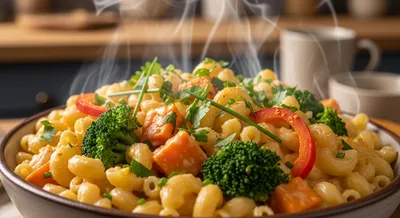
I spent years chasing a good vegan mac and cheese. I tried the boxed versions (mostly disappointing), the cashew-based sauces (delicious but requiring pre-soaking and a high-powered blender), and the nutritional yeast-heavy pastas that my non-vegan friends politely described as "interesting."
Then I found the approach that actually works. And once I did, I stopped looking. If you want a faster weeknight pasta that doesn't require soaking anything at all, [creamy vegan pasta in 20 minutes](/article/creamy-vegan-pasta-20-minutes) is the tahini-based shortcut that delivers 90% of the richness in a fraction of the time.
Key Takeaway
The best vegan mac and cheese builds its sauce from roasted cashews, nutritional yeast, and starchy pasta water emulsified together — the pasta water is what gives the sauce body and makes it coat every noodle properly. This approach produces a rich, silky texture that does not pool at the bottom of the bowl.
The Secret Is the Starch
Most vegan cheese sauces fail for the same reason: they try to replicate the fat and flavor of dairy without addressing the texture. Real cheese sauce gets its body and silkiness from emulsified milk proteins. Without those proteins, you need another strategy.
The answer is starchy vegetables — specifically, a combination of potato and carrot. When you boil them until very soft and blend them with cashews (or sunflower seeds for a nut-free version), nutritional yeast, garlic, and a few key flavor additions, you get a sauce with genuinely creamy, cohesive texture that doesn't fall apart or taste thin. Nutritional yeast is one of the pantry items that makes this kind of cooking possible — the [plant-based pantry essentials guide](/article/plant-based-pantry-essentials) has everything else worth stocking alongside it.
The potato provides starchy body. The carrot adds natural sweetness and color (hello, golden-orange hue). The nutritional yeast provides savory depth and a hint of the cheesy flavor that makes mac and cheese mac and cheese.
Ingredients (Serves 4)
For the pasta:
- 400g (14 oz) pasta — macaroni, shells, or cavatappi all work well
Estimated Nutrition
Per serving (1 serving (¼ of recipe))
- Calories500
- Protein19g
- Carbs88g
- Fat10g
- Fiber5g
Estimates based on ingredients. Values may vary.
For the sauce:
- 1 medium Yukon Gold potato (about 200g), peeled and cubed
- 1 medium carrot, peeled and cubed
- ½ cup raw cashews (soaked 30 minutes in hot water if you don't have a high-powered blender)
- ¼ cup nutritional yeast
- 1 clove garlic
- 1 tbsp lemon juice
- 1 tsp onion powder
- 1 tsp smoked paprika
- 1 tsp Dijon mustard
- ½ tsp turmeric (for color)
- ¾ cup vegetable broth or pasta water (adjust for consistency)
- Salt to taste
How to Make It
Boil the potato and carrot together in salted water until completely soft — about 15-20 minutes. They should fall apart easily when poked with a fork. While they cook, start your pasta.
Drain the potato and carrot and transfer them to a blender along with the drained cashews, nutritional yeast, garlic, lemon juice, onion powder, paprika, mustard, and turmeric. Add vegetable broth or pasta water, starting with ½ cup.
Blend on high until completely smooth — at least 2 minutes in a regular blender, or about 1 minute in a high-powered one. The sauce should be silky, thick, and deeply golden. Taste and adjust seasoning: more lemon for brightness, more nutritional yeast for cheesiness, more salt to bring everything together.
Drain your pasta, reserving a cup of pasta water. Add the sauce to the hot pasta and stir vigorously — the heat of the pasta and the starchy pasta water help the sauce cling and stay cohesive. Add pasta water as needed to reach your preferred consistency.
Level It Up
This base recipe is excellent on its own, but here's how to take it further:
Breadcrumb topping: Toss panko breadcrumbs with olive oil, garlic powder, and salt. Toast in a dry pan until golden. Sprinkle over the mac before serving for crunch.
Baked version: Transfer the finished mac to a baking dish, top with breadcrumbs, and bake at 375°F for 20 minutes until the top is crispy and the sauce is bubbling.
Mix-ins: Roasted broccoli and peas are natural partners. Crispy sage is lovely. A handful of spinach stirred in at the end adds color and nutrients without changing the flavor.
Heat: A pinch of cayenne or a few dashes of hot sauce in the sauce itself adds a nice background warmth.
Why This One Is Different
This sauce has body, richness, and genuine depth of flavor. It sticks to the pasta rather than pooling at the bottom of the bowl. It reheats well (add a splash of plant milk and stir over medium heat). It freezes reasonably well.
It tastes like mac and cheese. Not like a compromise, not like something trying to be mac and cheese and failing. Just: mac and cheese. Creamy, warm, comforting. If you love this kind of comfort-food cooking, [creamy mushroom stroganoff](/article/creamy-mushroom-stroganoff) uses similar cashew cream technique for a result that's equally convincing — even to non-vegans.
Make it once. Then let me know what you think.