There's a version of plant-based cooking that feels complicated — specialty products, obscure ingredients, a shopping list that looks like a chemistry syllabus. That's not what we're talking about here.
This is the list of 18 pantry staples that make plant-based cooking easy on a regular Tuesday. Not aspirational. Not for a photoshoot. For when you get home tired and need to get food on the table without thinking too hard.
Once you have these stocked, you can make dozens of different meals without a grocery run.
Key Takeaway
Stocking 18 plant-based pantry staples — including canned beans, lentils, whole grains, nutritional yeast, tahini, canned tomatoes, and core spices — makes it possible to cook a complete, nutritious meal on any weeknight without a grocery run. These are not specialty items; all 18 are available at any standard grocery store.
The Protein Foundation: Canned Legumes
Canned beans and lentils are the backbone of a plant-based pantry. They're fully cooked, shelf-stable for years, and cost about $1 a can. There is no more efficient protein on the planet.
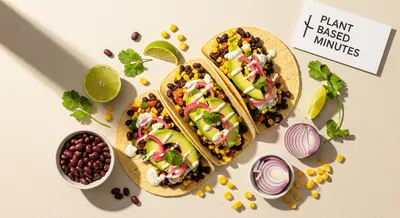
Black beans — the most versatile canned bean you can own. Goes into tacos, burrito bowls, soups, salads, grain bowls, and anywhere you'd otherwise reach for ground meat. One can: 15g protein, 15g fiber. Around $1.
Chickpeas (garbanzo beans) — roast them for crunch, blend them for hummus, simmer them in [curry](/article/15-minute-chickpea-curry), throw them in salads. Chickpeas are the one bean that holds up beautifully to almost any cooking method. Keep three cans minimum.
Red lentils — unlike other lentils, these don't need soaking and cook to a smooth, creamy texture in 20 minutes. They're the fastest route to a hearty soup or dal. Don't confuse them with green or brown lentils, which are great but different.
Cannellini beans (white beans) — creamy and mild, these blend into pasta sauces and soups without anyone noticing. They'll make your broth richer, your pasta creamier, and your nutrition profile significantly better.
The Grain Base
You don't need ten different grains. You need two.
Brown rice — I cook a big batch every Sunday and use it all week. Brown rice holds up well to reheating, unlike white rice which gets gummy. It's the neutral base for almost any bowl meal.
Rolled oats — buy the plain kind, not the flavored packets. [Overnight oats](/article/3-ingredient-overnight-oats), oatmeal, oat-based energy balls, added to smoothies for thickness. A $3 bag lasts weeks.
If you want a third grain, add quinoa — it's the only grain with a complete amino acid profile, and it cooks in 15 minutes. But start with rice and oats and add from there.
The Flavor Builders: Canned Tomatoes and Coconut Milk
Two cans that unlock more recipes than any other item in your pantry.
Canned diced tomatoes — the base for curry, chili, shakshuka, pasta sauce, and soup. Tomatoes are actually more nutritious canned than fresh because the heat processing increases lycopene availability. A quality can of diced tomatoes ($1-2) outperforms watery winter tomatoes every single time.
Full-fat coconut milk — the richest, creamiest ingredient in plant-based cooking. One can turns a bowl of spiced vegetables into something that tastes like it came from a restaurant. Always full-fat; the light versions are mostly water and not worth the shelf space.
Nuts and Seeds: Dense Nutrition in Small Packages
Natural peanut butter — look at the ingredients: it should say "peanuts" and maybe "salt." Nothing else. Peanut butter is one of the most calorie-dense, protein-rich pantry staples you can have. Stir it into oatmeal, blend it into sauces, spread it on everything. A 16-oz jar runs about $3-4 and lasts a month.
Hemp seeds — three tablespoons give you 10g of complete protein and significant omega-3 fatty acids. They taste like nothing, which means you can add them to anything. Smoothies, oatmeal, salads, pasta. This is the one "supplement-adjacent" ingredient worth keeping stocked.
Raw cashews — the secret to creamy plant-based sauces and dressings. Soaked for a few hours and blended, they become the base for vegan alfredo, cashew cream, and cheese sauces that are genuinely good. Buy a bag, keep it in the freezer.
The Spice Shelf
You don't need thirty spices. You need these five:
Cumin — earthy, warm, essential for anything with beans. If you only add one spice to black beans before eating them, make it cumin.
Smoked paprika — adds depth and a faint smokiness that stands in for the char flavor most people miss when they cut out meat. A half teaspoon in soups and stews makes a real difference.
Curry powder — I buy a quality blend rather than building it from scratch. A good curry powder turns chickpeas and coconut milk into dinner in 15 minutes. Don't buy the generic supermarket blend if you can avoid it — the difference in flavor is significant.
Garlic powder — in addition to fresh garlic, not instead of it. It layers in differently. Goes directly into spice rubs, dry seasonings, and any sauce where you want garlic flavor without texture.
Nutritional yeast — technically not a spice, but it lives in the same drawer. "Nooch" is a deactivated yeast that tastes cheesy and nutty and savory. It's the key ingredient in [vegan mac and cheese](/article/vegan-mac-and-cheese-that-hits-different). Sprinkle it on pasta, stir it into soups, blend it into sauces. It also has significant B12 content. Buy a bag and you'll be through it faster than you expect.
The Liquids
Soy sauce (or tamari for gluten-free) — a teaspoon added to almost any savory dish adds umami and depth. It's not just for Asian cooking; it's a general-purpose flavor enhancer. Tamari is just a richer, gluten-free soy sauce — they're interchangeable in most recipes.
Apple cider vinegar — a splash in soups, grain bowls, and dressings brightens everything and cuts through richness. Cheap, shelf-stable, and more useful than most people expect.
How to Shop This List
Buy in batches, not one-by-one. Most of these are shelf-stable for 1-2 years, so stocking up when things are on sale makes sense. A full pantry restock of this list costs $60-80 at most grocery stores, less at Costco or bulk-bin stores.
The goal isn't a gourmet pantry. The goal is never having to order delivery because "there's nothing to eat" when you actually have beans, rice, coconut milk, and spices sitting right there.
What You Can Make Right Now
With just black beans, brown rice, coconut milk, canned tomatoes, cumin, and smoked paprika, you can make:
- A rice and beans bowl with smoky coconut sauce
- A quick black bean soup (or the [one-pot lentil soup](/article/one-pot-lentil-soup-family-sized) that feeds a family)
- A basic rice pilaf with spiced tomatoes
- An improvised burrito bowl
That's four meals from six pantry items. That's the point.
Stock the basics, and the rest becomes easy.