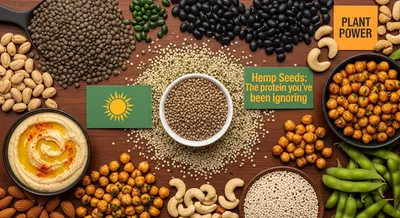
I need to tell you about hemp seeds.
Not because they're trendy. Not because some wellness influencer is putting them in everything. Because the actual nutritional data is genuinely impressive, and most people walk right past them in the store without understanding what they're looking at.
Key Takeaway
Hemp seeds are a complete protein — containing all nine essential amino acids — delivering 10 grams of protein per three tablespoons, plus omega-3 and omega-6 fatty acids in an ideal 3:1 ratio. They have a mild, nutty flavor and can be sprinkled on nearly any dish without changing the taste.
What Makes Hemp Seeds Unusual
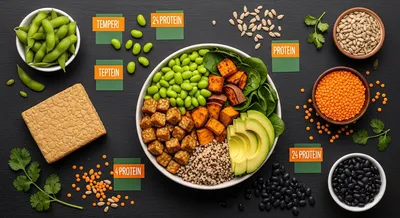
Most plant proteins are incomplete — they're missing one or more of the essential amino acids that your body can't produce on its own. Hemp seeds are one of the rare exceptions. They contain all nine essential amino acids in proportions that closely resemble the protein profile of egg whites. This makes them a complete protein source in a way that most other seeds, nuts, and grains simply aren't. For the full picture on how plant proteins actually work — including why the "incomplete protein" concern is largely overblown — [protein myths debunked](/article/protein-myths-debunked) covers the research clearly.
Three tablespoons of hulled hemp seeds (also called hemp hearts) contains:
- 10 grams of protein
- 15 grams of total fat (mostly omega-3 and omega-6 in an ideal 3:1 ratio)
- 1 gram of carbohydrates
- Iron, magnesium, zinc, phosphorus, and folate in meaningful quantities
That protein-to-calorie ratio is remarkable for a plant food. And the fat profile is particularly notable: hemp seeds are one of the best dietary sources of gamma-linolenic acid (GLA), an omega-6 fatty acid with documented anti-inflammatory properties.
The Omega Ratio Actually Matters
Most people in Western countries consume far too many omega-6 fatty acids relative to omega-3s — ratios of 15:1 or 20:1 are common. The optimal ratio for inflammation management and cardiovascular health is closer to 4:1 or 3:1. Hemp seeds naturally sit at about 3:1. Adding them to your diet as a regular source of fat moves the needle toward a healthier balance.
How to Actually Use Them
Hemp seeds taste mild and slightly nutty — somewhere between a sunflower seed and a pine nut. They're small, soft, and easy to eat. There's no blending or cooking required, which makes them genuinely one of the easiest nutritional upgrades you can make.
Add them to smoothies: Three tablespoons adds 10 grams of protein without changing the flavor. They're particularly good in a [5-minute smoothie bowl](/article/5-minute-smoothie-bowl) — the seeds blend invisibly into the thick base or sprinkle beautifully on top.
Sprinkle on salads: The subtle nuttiness works well with almost any dressing, and they don't go soggy the way croutons do.
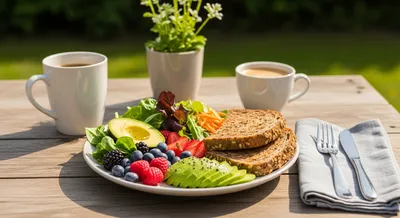
Mix into oatmeal: Stir them in at the end of cooking. Improves the protein content of breakfast significantly. If overnight oats are your morning default, adding hemp seeds makes them one of the [most filling high-protein breakfasts](/article/high-protein-plant-based-breakfast) you can build without supplements.
Top avocado toast: Better nutritional profile than everything bagel seasoning, comparable texture.
Blend into dressings and sauces: They dissolve almost completely when blended, making them invisible in a green goddess dressing or pesto.
Stir into plant-based yogurt: Use them in place of granola for a lower-sugar, higher-protein topping.
The One Reason People Don't Use Them
Cost. Hemp seeds are more expensive than most seeds per pound — typically $8-12 for a medium bag. But at three tablespoons per serving, a bag lasts a long time. The cost per serving is under a dollar, and you're getting 10 grams of complete protein for that dollar.
Compare that to a protein powder: most cost $2-4 per serving for a similar protein yield, with processing, additives, and artificial flavors included. Hemp seeds are the whole food version with better micronutrient coverage.
The Bottom Line
Hemp seeds don't need marketing. The numbers speak for themselves. They're one of the densest, most complete protein sources available in a small, versatile, easy-to-use package.
Buy a bag, put them in the pantry, and start adding three tablespoons to whatever you're already eating. It's the easiest nutritional upgrade you'll make this year. Hemp seeds belong on the [plant-based pantry essentials list](/article/plant-based-pantry-essentials) alongside tahini, nutritional yeast, and canned legumes.