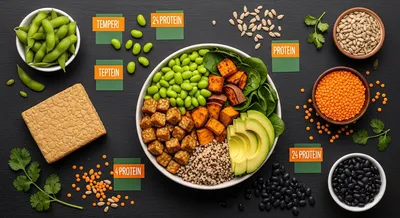
If I had to point to one meal that completely changed how I thought about plant protein, it would be this bowl.
I spent a long time thinking plant-based eating meant accepting a protein compromise. Then I started learning about the actual numbers — and made this bowl for the first time — and realized the compromise was something I'd invented. You can get 35+ grams of complete, high-quality plant protein in a single meal that takes 25 minutes to make.
Key Takeaway
An edamame and tempeh bowl delivers 35 or more grams of complete plant protein per serving because both ingredients come from soy — one of the only plant proteins that contains all nine essential amino acids. This is one of the highest-protein plant-based meals you can make in 25 minutes.
Why Tempeh and Edamame
Both of these are made from soybeans, and soy is one of the few plant proteins that's genuinely complete — meaning it contains all nine essential amino acids in meaningful quantities, the same profile you'd find in animal protein.
Tempeh is fermented, compressed soybean cake. The fermentation process increases protein bioavailability and adds gut-friendly bacteria. One serving has around 20 grams of protein. It has a dense, meaty texture that stands up to pan-frying beautifully — it gets crispy edges that make it satisfying to eat in a way that soft proteins often aren't. If you've never cooked it before, [the complete tempeh guide](/article/how-to-cook-tempeh) covers exactly how to steam, marinate, and cook it properly.
Edamame is young green soybeans, and they're one of the few vegetables with a protein profile that rivals many animal sources. One cup has 17 grams of protein, plus fiber, iron, magnesium, and folate. They're also sweet and satisfying to eat — one of those foods that feels like a snack but works as a serious nutritional contributor.
What Goes in the Bowl
Base:
- 1 cup cooked brown rice or quinoa (I prefer quinoa for the extra protein boost)
- 1 cup shelled edamame (frozen works perfectly, just thaw or briefly cook)
Estimated Nutrition
Per serving (1 bowl)
- Calories490
- Protein35g
- Carbs44g
- Fat19g
- Fiber12g
Estimates based on ingredients. Values may vary.
Pan-fried tempeh:
- 1 block (8 oz) tempeh, cut into cubes or thin slabs
- 2 tbsp soy sauce
- 1 tbsp rice vinegar
- 1 tsp sesame oil
- 1 tsp garlic powder
- 1 tsp maple syrup or agave (helps with browning)
Fresh elements:
- Shredded red cabbage
- Sliced cucumber
- Shredded carrots
- Fresh cilantro or green onion
Sauce (miso-ginger):
- 1 tbsp white miso
- 1 tbsp rice vinegar
- 1 tsp grated fresh ginger
- 1 tsp sesame oil
- 1-2 tsp maple syrup
- Water to thin
The Method
Marinate the tempeh cubes in soy sauce, rice vinegar, sesame oil, garlic powder, and maple syrup for at least 15 minutes (longer is better). Heat a non-stick pan over medium-high heat with a little oil. Fry the tempeh pieces in a single layer for 3-4 minutes per side until deep golden brown and slightly crispy. Don't crowd the pan.
Cook the grain of your choice. Warm the edamame.
Whisk together the miso-ginger sauce, adding enough water to make it pourable.
Assemble: grain on the bottom, tempeh and edamame side by side, fresh vegetables arranged around them, sauce drizzled generously over everything. Finish with sesame seeds and fresh herbs.
The Numbers
A full bowl comes in at approximately 480 calories, 38 grams of protein, 12 grams of fiber, and a genuinely impressive spread of micronutrients including iron, calcium, vitamin C, and zinc.
This is the kind of meal that makes it easy to understand why plant-based athletes are everywhere now. The protein is there. The quality is there. You just have to know where to look. For the full context on why plant protein works just as well as animal protein for performance, [protein myths debunked](/article/protein-myths-debunked) has the research.
Make It a Prep Staple
Marinate and cook a double batch of tempeh on Sunday and refrigerate it. It reheats well and tastes great cold. Build this bowl on demand all week. It takes about five minutes when the tempeh is already done. The [plant-based athlete meal prep framework](/article/plant-based-athlete-meal-prep) shows exactly how to structure a full week of high-protein meals around this kind of prep.
This bowl is proof that eating for performance and eating for pleasure don't have to be separate things.