The most common conversation I have about plant-based eating goes like this: "But where do you get your protein?" It's asked with genuine concern, as if protein is something that only exists in meat. After years of fielding this question, I've come to appreciate it — not because the question is well-informed, but because it's an opportunity to actually explain what's going on.
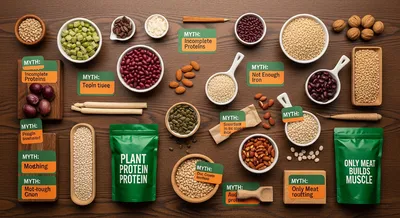
There are several myths about plant protein that are genuinely worth dismantling.
Key Takeaway
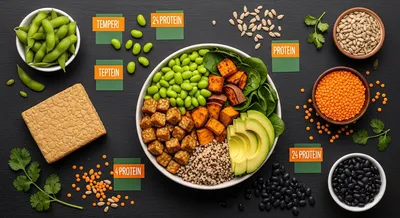
You do not need to combine plant proteins at every meal — eating a variety of whole plant foods throughout the day provides all essential amino acids. Lentils, black beans, tofu, hemp seeds, and edamame each provide substantial protein, and layering them across meals makes hitting 100 or more grams per day straightforward.
Myth 1: You Can't Get Enough Protein on a Plant-Based Diet
This is the big one, and it's simply not true. Protein is found in enormous quantities in legumes, soy foods, whole grains, seeds, and nuts. The idea that you need meat to meet your protein needs is a product of marketing, not nutritional science.
For reference: a cup of cooked lentils has 18 grams of protein. A half-cup of edamame has 8 grams. A cup of black beans has 15 grams. A block of tofu has 30+ grams. Three tablespoons of [hemp seeds](/article/hemp-seeds-the-protein-you-ve-been-ignoring) have 10 grams. Layer these foods throughout a day of eating and reaching 100, 120, or even 150 grams of protein is not particularly difficult.
Position statement from the Academy of Nutrition and Dietetics (the largest organization of food and nutrition professionals in the world): "Well-planned vegan diets are appropriate for all stages of life, including pregnancy, lactation, infancy, childhood, adolescence, and older adulthood, as well as for athletes."
Myth 2: Plant Protein Is Inferior to Animal Protein
This one is more nuanced. The concern is that plant proteins are "incomplete" — lacking one or more essential amino acids. This is true for individual plant foods in isolation, but it's largely irrelevant in practice.
First: soy (tofu, [tempeh](/article/edamame-and-tempeh-protein-bowl), edamame), hemp seeds, and quinoa are complete proteins with all nine essential amino acids.
Second: amino acid complementarity doesn't need to happen within a single meal. When you eat a variety of plant proteins throughout the day — beans, grains, seeds, vegetables — you're getting all essential amino acids in adequate quantities. This was misunderstood for decades and led to the idea that you had to "combine" proteins at every meal. That's not how protein metabolism works.
Third: protein digestibility (how much of the protein your body actually uses) is slightly lower for some plant proteins compared to animal proteins, but the practical difference when eating a varied diet is minimal.
Myth 3: You Need to Track Protein Obsessively on a Plant Diet
If you're eating enough calories from whole plant foods and including legumes, tofu, or tempeh regularly, you're almost certainly getting sufficient protein. Most people who experience protein concerns on plant-based diets are simply not eating enough total food.
Tracking is useful as a temporary learning tool — a few weeks of logging to understand your typical intake — but not as a permanent daily practice unless you're an athlete with specific performance goals.
Myth 4: Animal Protein Is the Best for Building Muscle
Multiple randomized controlled trials have compared muscle gain in subjects consuming equivalent amounts of plant and animal protein with the same training protocol. The results are consistent: no significant difference in muscle mass or strength outcomes. For practical application of these findings, the [plant-based athlete meal prep guide](/article/plant-based-athlete-meal-prep) shows how to structure a training week on plants.
A 2021 meta-analysis in the journal Sports Medicine found that "plant-based diets, when appropriately planned to meet energy and macronutrient requirements, do not appear to impair strength or hypertrophy adaptations."
What matters for muscle growth is total protein intake, protein distribution throughout the day, and training stimulus — not the source of the protein.
Myth 5: Protein Powders Are Necessary
Whole food protein sources are nutritionally superior to isolated protein powders in virtually every measurable way. They come with fiber, vitamins, minerals, and phytonutrients that protein powders strip away. They're cheaper per gram of protein. They're not processed with industrial solvents or heavy metal contamination concerns (which have been documented in multiple third-party analyses of protein powders).
Pea protein and hemp protein powders are reasonable options for athletes with high protein requirements who struggle to hit targets through food alone. But they're supplements, not necessities.
What's Actually True
Plant protein works. The evidence is there. The athletes performing at the highest levels on plant-based diets are there. The science is there.
If you've been told otherwise, it's worth asking who benefits from that story. And if you want to know how to actually answer that question in conversation, [how to handle the protein question](/article/how-to-handle-the-protein-question) covers both the short and long versions.