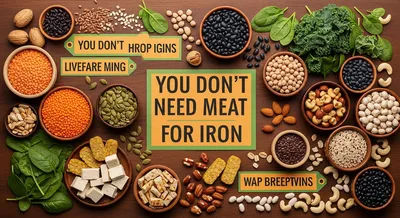
Iron deficiency is one of the most common nutritional concerns raised about plant-based eating. And it's a legitimate concern — iron is essential, deficiency is real, and anemia is miserable. But the idea that you need meat to get adequate iron is a myth built on a half-truth. B12 is the other nutrient people ask about — [everything you need to know about vegan B12](/article/vegan-b12-guide) settles that question equally clearly.
Here's what's actually going on.
Key Takeaway
Plant-based iron from lentils, beans, tofu, pumpkin seeds, and dark leafy greens is highly absorbable when eaten with vitamin C — squeeze lemon juice over your iron-rich meals and absorption increases significantly. You do not need meat to meet your daily iron requirements.
The Two Types of Iron
There are two forms of dietary iron: heme iron and non-heme iron.
Heme iron is found in animal products — meat, poultry, seafood. It's bound to hemoglobin and myoglobin, and the body absorbs it at a rate of roughly 15-35%. Because it absorbs easily, it's been promoted as the "superior" form.
Non-heme iron is found in plant foods — legumes, leafy greens, nuts, seeds, fortified foods. It's absorbed at a lower baseline rate of 2-20%, but here's the part most people don't know: non-heme iron absorption is highly regulated by the body and significantly enhanced by co-consuming vitamin C.
The body is not a passive absorber. It actively regulates non-heme iron uptake based on its current stores — absorbing more when stores are low, less when stores are adequate. Heme iron, by contrast, is absorbed at consistent rates regardless of need, which is one reason high red meat consumption is associated with iron overload rather than just optimal levels.
Plant Sources of Iron
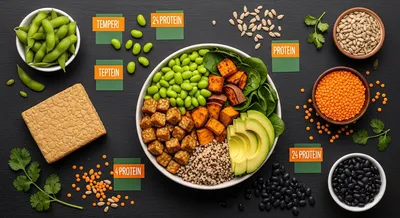
The idea that iron only exists in meaningful quantities in meat is simply wrong. Here are plant foods with high iron content per serving:
- Lentils (1 cup cooked): 6.6 mg — 37% of daily value
- Tofu (½ cup): 3.4 mg — 19% of daily value
- Spinach (1 cup cooked): 6.4 mg — 36% of daily value
- Chickpeas (1 cup cooked): 4.7 mg — 26% of daily value
- Pumpkin seeds (1 oz): 2.5 mg — 14% of daily value
- Blackstrap molasses (1 tablespoon): 3.5 mg — 19% of daily value
- Quinoa (1 cup cooked): 2.8 mg — 15% of daily value
- Fortified oats (1 cup): 3.8 mg — 21% of daily value
Combine lentils, spinach, and a squeeze of lemon juice in a single meal and you've covered more than 70% of your daily iron needs in one bowl. The [one-pot lentil soup](/article/one-pot-lentil-soup-family-sized) is exactly this combination — and it's a meal you can make in 30 minutes for under $1.50 per serving.
The Vitamin C Enhancement
This is the most practical and important thing to know: pairing non-heme iron sources with vitamin C can increase absorption by 3 to 6 times.
Add lemon juice to lentil soup. Eat your spinach salad with tomatoes and bell peppers. Pair beans with salsa. Drink orange juice with a bean-heavy meal. These are small, easy habits that substantially improve the amount of iron you actually absorb.
Equally important: certain compounds reduce iron absorption. Tannins (in coffee and tea) and calcium can inhibit iron absorption when consumed simultaneously. Drink coffee or tea between meals rather than with iron-rich meals if iron optimization is a priority.
What the Data Shows
Large population studies consistently show that well-planned plant-based diets do not result in higher rates of iron deficiency compared to omnivorous diets. The Adventist Health Study-2, one of the largest studies of vegetarian populations, found that vegans had lower rates of some nutrient deficiencies than meat-eaters, partly because they paid more attention to what they ate.
Plant-based eaters who develop iron deficiency typically do so because of inadequate total intake or poor absorption strategies — not because plants lack iron.
If You're Concerned
Get your ferritin (stored iron) checked at your next physical. This is the most accurate indicator of iron status. If it's low, you can address it through targeted food choices and absorption strategies before considering supplementation.
Iron supplementation has side effects (constipation is common) and can be counterproductive at inappropriate doses. Food-based iron with absorption optimization is almost always the right first approach.
The Bottom Line
You don't need meat for iron. You need iron-rich plant foods, vitamin C, and a little knowledge about what helps and what hinders absorption.
That's it. That's the whole myth, debunked. Calcium is the other mineral people assume requires dairy — [12 plant-based calcium sources](/article/vegan-calcium-sources) shows the data is similarly reassuring. And the protein myths are [equally worth revisiting](/article/protein-myths-debunked) while you're at it.