Let's talk about the saddest meal in the office: the limp lettuce salad, underdressed and lukewarm by noon. You packed it with good intentions on Sunday, and by Tuesday it's a punishment.
You deserve better. And you can do better — in 10 minutes or less.
These five lunches are what I actually pack. They travel well, hold up in the fridge overnight, and are filling enough that you're not raiding the break room vending machine at 3 p.m.
Key Takeaway
The five best plant-based packed lunches — grain bowls, bean wraps, pasta salads, lentil soups, and hearty salads with chickpeas or tempeh — all take ten minutes or less to pack, hold up well through the morning, and provide enough protein and fiber to carry you through the afternoon.
Why Vegan Lunches Are the Best Meal to Optimize
Lunch is the meal where most people take shortcuts — and that's actually good news. The bar for what counts as a "good lunch" is low. If it's filling, portable, doesn't need to be reheated (or reheats fine in a microwave), and doesn't take 30 minutes to make in the morning, it wins.
Plant-based food clears that bar easily. Grains, legumes, and vegetables hold up better than most animal proteins when stored — chickpeas stay firm, lentils don't get slimy, and beans only get better as they absorb dressing. You're working with ingredients that are designed, by nature, to sit around and be patient.
Here are the five I rotate through.
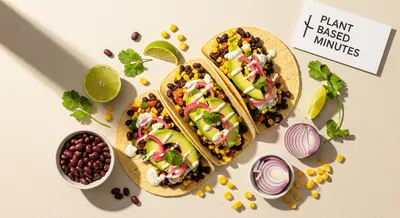
1. Smashed Chickpea Wraps
Time: 8 minutes (including wrap assembly)
If you've never smashed chickpeas, you're missing out. Drain a can, put them in a bowl, and use a fork to roughly mash — you want about half mashed, half whole. Mix in:
- 2 tablespoons tahini
- Juice of half a lemon
- 1 teaspoon Dijon mustard
- Salt, pepper, and a pinch of smoked paprika
Add diced celery and red onion if you have them. Spread into a large flour tortilla with whatever greens you have — arugula, spinach, shredded cabbage — and roll tightly. Wrap in parchment, pop in a container.
This holds for two days in the fridge without getting soggy, because the filling is thick and the greens are on the outer edge. It's also extremely portable — you can eat it walking or at your desk without a fork.
Goes well with: our [15-minute chickpea curry](/article/15-minute-chickpea-curry) if you want a warming dinner version of this same base ingredient.
2. Lentil and Rice Thermos Bowl
Time: 5 minutes (if you have cooked lentils)
This is the power move of desk lunches: a thermos. If you have leftover rice and cooked lentils in the fridge — which you will if you do any batch cooking at all — this comes together in five minutes.
Heat lentils and rice together with a splash of broth or water in a small pot. Season aggressively: cumin, coriander, salt, and a big squeeze of lemon. Pour into a wide-mouth insulated thermos. It stays warm for four hours. At your desk, open, eat, done.
No microwave required. No reheating awkwardness. The thermos is genuinely underrated as a lunch tech.
The batch cooking unlock: if you set up a Sunday prep session — even just a pot of lentils — you have lunches for the full week. Our [3-bean Sunday meal prep guide](/article/3-bean-sunday-meal-prep) covers exactly this approach for building a full week of plant-based lunches in one session.
3. Mason Jar Salad (The One That Actually Works)
Time: 10 minutes
Mason jar salads have a reputation problem because most people build them wrong, then wonder why the lettuce is soggy. The sequence matters.
Layer in this order, from bottom to top:
- Dressing (2 tablespoons at the bottom)
- Hearty vegetables that can sit in dressing: cherry tomatoes, cucumbers, roasted red peppers
- Protein: chickpeas, lentils, edamame, or crumbled tofu
- Grains or nuts: cooked farro, quinoa, or toasted pumpkin seeds
- Leafy greens: spinach, arugula, or chopped romaine — packed in last, on top
When you're ready to eat, shake and dump into a bowl. The greens, which were sitting above the dressing the whole time, land on top and only mix in at the last moment. Crisp, crunchy, actually good.
My go-to dressing: 1 tablespoon olive oil, 1 tablespoon lemon juice, 1 teaspoon Dijon, ½ teaspoon maple syrup, salt and pepper. Shake in a small jar before adding to the big jar.
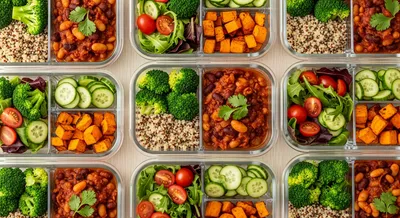
4. Grain and Roasted Vegetable Buddha Bowl
Time: 5 minutes (if you have roasted vegetables from the week)
If you roast vegetables on the weekend — which takes 30 minutes of oven time and about 10 minutes of actual effort — you have the core of five lunches ready to go.
Pack a bowl with:
- A base of cooked grains (brown rice, farro, or quinoa)
- A generous scoop of roasted vegetables (sweet potato, cauliflower, beets, or whatever's in season)
- A protein: chickpeas, white beans, or sliced baked tofu
- Dressing: tahini thinned with lemon juice and a little water
The magic of a buddha bowl is that the components can mix and match across the week. Same roasted sweet potato that went in Wednesday's bowl can go in Friday's with different grains and a different protein. Our [5-day buddha bowl meal prep](/article/5-day-buddha-bowl-meal-prep) covers how to batch this so every lunch takes under five minutes of assembly.
5. White Bean and Arugula Pasta Salad
Time: 10 minutes (plus pasta cook time if not pre-cooked)
Pasta salad is a power lunch move that's deeply underrated. Make a batch on Sunday — it keeps for four days — and each morning you just portion it out.
Cook pasta al dente (it'll soften slightly as it absorbs dressing over time, so slightly undercooking is correct). While still warm, toss with:
- 1 can white beans, drained
- Handful of arugula
- Sun-dried tomatoes, roughly chopped
- ¼ cup kalamata olives
- 3 tablespoons olive oil
- 1 tablespoon red wine vinegar
- Garlic powder, salt, pepper, and dried oregano
The warm pasta helps the flavors absorb immediately. By the next day, this salad is even better — the beans and pasta have soaked up everything. Pack it cold and eat it straight from the container.
The 10-Minute Morning Framework
These lunches share a structure worth naming:
- Pre-cook one batch component on Sunday: grains, roasted vegetables, or pasta salad. This is 20–30 minutes of effort that creates 5 days of lunch building blocks.
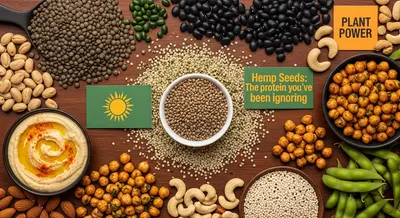
- Protein on demand: keep canned chickpeas, white beans, and lentils in the pantry. No cooking required — drain, season, add.
- Dressing in a jar: make a week's worth of dressing on Sunday (a 2:1 ratio of fat to acid, plus salt and a touch of something sweet). It keeps for a week and eliminates the morning guesswork.
With those three elements in place, every lunch below is assembly, not cooking. The morning becomes: grab the base, add protein, add dressing, pack.
What Makes a Vegan Lunch Actually Filling
This is worth addressing directly, because "I'm always hungry after a plant-based lunch" is a real and solvable problem.
The answer is almost always: not enough protein and fat.
Protein targets for lunch: aim for 20–30g. Chickpeas: 14g per cup. Lentils: 18g per cup. White beans: 17g per cup. Edamame: 17g per cup. Adding any of these to your lunch base gets you there.
Fat signals satiety: tahini, olive oil, avocado, and nuts slow digestion and tell your brain the meal is complete. A salad without fat is a salad that leaves you hungry. Add tahini dressing, a handful of almonds, or half an avocado.
Fiber from whole grains: swap refined pasta and white rice for farro, brown rice, or quinoa. The fiber slows glucose absorption and extends the fullness window.
Get the protein and fat right, and a plant-based lunch is just as satiating as anything else.
The Bottom Line
The desk salad fails because it's underpowered and built for virtue, not for eating. These five lunches are built to be good — filling, flavorful, and ready in 10 minutes with the right prep.
Pick one to try this week. Make the batch component on Sunday. See how different it feels to actually look forward to your desk lunch.
Related guides: [15-Minute Chickpea Curry](/article/15-minute-chickpea-curry) · [3-Bean Sunday Meal Prep](/article/3-bean-sunday-meal-prep) · [5-Day Buddha Bowl Meal Prep](/article/5-day-buddha-bowl-meal-prep)