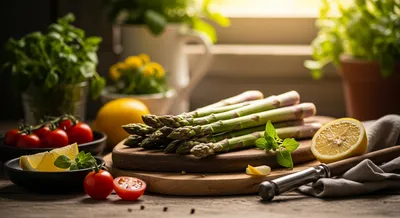
There's a window every year when asparagus is genuinely, spectacularly good. It's short — roughly six weeks from late March through early May depending on where you live — and then it's gone, replaced by the sad, rubbery, expensive bundles that appear in grocery stores year-round and make people think they don't like asparagus.
Those people haven't tried asparagus in season. If they had, they'd understand what all the fuss is about.
Key Takeaway
Buy asparagus during its six-week peak season — late March through early May — when it is sweet, tender, and snaps cleanly when bent. Out-of-season asparagus sold year-round in grocery stores is a fundamentally different product; roasting in-season spears at high heat with olive oil and sea salt is all they need.
What Makes In-Season Asparagus Different
Fresh, in-season asparagus has a sweetness and tenderness that out-of-season or stored asparagus simply can't match. The spears should snap cleanly when you bend them — that's the freshness test. They should smell faintly green and bright, not musty. The tips should be tight and compact, not splayed or dry.
When you get good asparagus, you don't need to do much to it. The preparation should be simple enough to let the vegetable be the point.
The Simple Preparation
The best thing you can do with fresh asparagus is also the easiest: roast it.
Snap off the woody ends (hold each spear at both ends and bend — it naturally breaks at the right place). Spread in a single layer on a baking sheet. Drizzle with good olive oil, season with salt and black pepper, and roast at 425°F for 10-15 minutes depending on thickness. The high heat is essential — you want caramelization and slight char on the tips, not steaming.
What comes out is asparagus with concentrated, slightly sweet, smoky flavor and just enough bite that it doesn't collapse when you eat it.
Finish with a squeeze of lemon and you have something genuinely special.
Nutritional Profile
Asparagus is one of the most nutrient-dense spring vegetables available. Per 100 grams:
- Folate: 52 micrograms — crucial for cell division and particularly important during pregnancy
- Vitamin K: About 41 micrograms — important for blood clotting and bone health
- Vitamin C: 5.6 mg, plus significant vitamin E
- Prebiotic fiber: Asparagus contains inulin, a prebiotic fiber that feeds beneficial gut bacteria
- Asparagine: An amino acid that the vegetable is named after and that acts as a mild natural diuretic
It's also very low in calories — about 20 calories per 100 grams — which makes it an ideal side dish for building out balanced meals.
More Ways to Use It
Beyond roasting, asparagus is incredibly versatile during its season.
Raw in salads: Very thin (pencil) asparagus can be shaved into ribbons with a vegetable peeler and eaten raw. Dress with lemon, olive oil, and shaved nuts or seeds. Shaved asparagus also works beautifully in packed lunches — see [5 easy vegan lunch ideas](/article/vegan-lunch-ideas) for inspiration on building travel-friendly meals around seasonal produce.
Grilled: Excellent on a grill pan or outdoor grill. Takes 4-5 minutes over high heat, turning once. The char adds a smoky dimension that's different from roasting.
In pasta: Slice into 1-inch pieces and add to any pasta dish in the last 3-4 minutes of cooking. Pairs particularly well with lemon, garlic, white beans, and fresh herbs — the [tahini-based creamy pasta](/article/creamy-vegan-pasta-20-minutes) is an especially good base for spring asparagus.
In risotto: Classic spring pairing. Add asparagus tips and sliced spears in the final minutes of risotto cooking so they stay bright green and slightly crisp.
Steamed with vinaigrette: Classic French preparation. Steam briefly until just tender, dress with a mustard vinaigrette while warm, serve at room temperature. Elegant and simple.
Buying and Storing
When buying, look for firm, bright green spears with tight tips. Thickness is a matter of preference — thinner spears are more tender, thicker ones have more heft and flavor when roasted. Asparagus is a great example of why seasonal produce matters — see the [weekly grocery haul guide](/article/weekly-grocery-haul-under-50-dollars) for how to shop around seasonal vegetables to keep costs low and quality high.
To store: treat asparagus like flowers. Trim the ends and stand the bunch upright in a glass of cold water in the refrigerator, or wrap the ends in a damp paper towel. It should keep for 3-5 days this way.
Make the Most of the Season
Asparagus season is brief enough that it's worth seeking out whenever it's available at its best — farmers markets and farm stands during spring often have exceptional quality that supermarkets rarely match. When you have a great haul of it, build your week around it — the [5-day buddha bowl meal prep](/article/5-day-buddha-bowl-meal-prep) is flexible enough to use asparagus as the roasted vegetable component for something genuinely special.
Eat it simple. Eat it often. The season goes fast.