I've been doing this $50 haul challenge for years, and I've gotten pretty good at it. Not as a stunt or a viral moment — just as a practical way to eat well, reduce food waste, and not spend more than I need to on groceries when whole plant foods are genuinely inexpensive. For a more detailed breakdown of what to keep stocked long-term, the [plant-based grocery list for beginners](/article/plant-based-grocery-list-for-beginners) organizes everything by pantry tier, fridge tier, and freezer.
Here's exactly what I buy, why, and how it becomes a full week of real meals.
Key Takeaway
A complete week of nutritious plant-based eating fits comfortably within $50 by centering the haul on dried lentils, canned beans, oats, frozen vegetables, whole grains, and nut butter — the highest nutritional value per dollar in any grocery store. Skip processed vegan products, which add cost without adding meaningful nutrition.
The Philosophy First
The goal isn't restriction — it's efficiency. I'm buying the highest nutritional value per dollar, focusing on versatile ingredients that work in multiple meals, and avoiding processed items where the markup is mostly paying for packaging and marketing.
Plant-based eating has a massive cost advantage over meat-centric eating when you build around whole foods. A pound of dried lentils has more protein than a pound of chicken and costs a fraction of the price. A bag of rice feeds you for a week. This is the foundation.
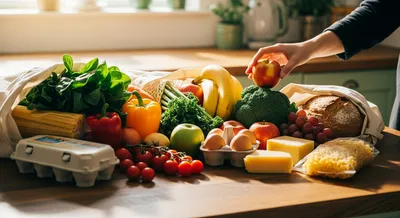
The Haul (Approximate Prices)
Dry goods and staples (~$18):
- 1 lb dried red lentils — $1.50
- 2 cans black beans — $2.00
- 2 cans chickpeas — $2.00
- 1 large container rolled oats — $4.00
- 2 lbs brown rice — $3.00
- 1 lb whole wheat pasta — $1.50
- 1 jar natural peanut butter — $4.00
Produce (~$16):
- 1 large head of cabbage — $1.50
- 3 bell peppers (buy the multipack when on sale) — $3.00
- 1 bunch of bananas — $1.50
- 2 lbs sweet potatoes — $2.50
- 1 bag of spinach or kale (frozen works and is cheaper) — $2.50
- 1 head of garlic — $0.75
- 3 medium onions — $1.50
- 2 limes — $1.00
- 1 bag of carrots — $1.50
Refrigerated (~$12):
- 1 block firm tofu — $2.50
- 1 carton oat milk — $4.50
- 1 tub hummus — $3.50 (or make it from your chickpea cans)
- 1 avocado (optional, depends on price) — $1.50
Pantry replenishment (spread over several weeks, ~$4 this week):
- Soy sauce, cumin, chili powder, turmeric, garlic powder — these last for months and cost pennies per use
Total: approximately $50
What This Becomes
Breakfast every day: [Overnight oats](/article/3-ingredient-overnight-oats) (oats + oat milk + banana + peanut butter) — $0.50/day
Lunch all week: Red lentil dal over brown rice — 1 batch, 5 lunches, costs about $8 total — $1.60/day
Dinners:
- Monday: Tofu stir-fry with cabbage, bell peppers, and rice in peanut sauce — $2.50/serving
- Tuesday: Black bean tacos with avocado, cabbage slaw, and lime — $2.00/serving
- Wednesday: Pasta with chickpeas, spinach, and garlic — $2.00/serving
- Thursday: Sweet potato and chickpea curry with rice — $2.00/serving
- Friday: Grain bowl leftovers from the week, creatively combined
Snacks: Hummus with carrots and bell pepper strips. Peanut butter on toast. Banana.
Total daily food cost: Roughly $7-8 per day for three meals and snacks. That's under $250/month on food for one person eating well.
Tips That Actually Help
Freeze what you won't use: That extra half-block of tofu, leftover cooked rice, those bananas that are going too ripe — freeze them. The tofu becomes crumblier when frozen and thawed (great for scrambles). Rice reheats from frozen in minutes. Frozen bananas are essential for smoothie bowls.
Cook once, eat multiple times: The lentil dal becomes soup tomorrow if you add more broth. Leftover rice becomes fried rice with scrambled tofu. Roasted sweet potatoes go into grain bowls, tacos, or get mashed.
Buy in season and on sale: The produce section of this haul varies week to week based on what's cheap. [Asparagus in spring](/article/spring-seasonal-spotlight-asparagus), zucchini in summer, butternut squash in fall. Seasonal produce is cheaper and tastier.
Generic brands are fine: For canned beans, lentils, oats, and rice, the store brand is identical to the name brand.
The Bigger Picture
Food is one of the most controllable categories in your budget and one of the most important for your health. These two facts usually seem like they're in tension — healthy food is expensive, right?
Not when you build around whole plants. Then they're working together. Less money. Better food. More of it. If you're coming at this from a truly limited budget, [eating plant-based on a college budget](/article/eating-plant-based-on-a-college-budget) shows how to do it for even less.
This week's haul proves it. Spend $50, eat really well.